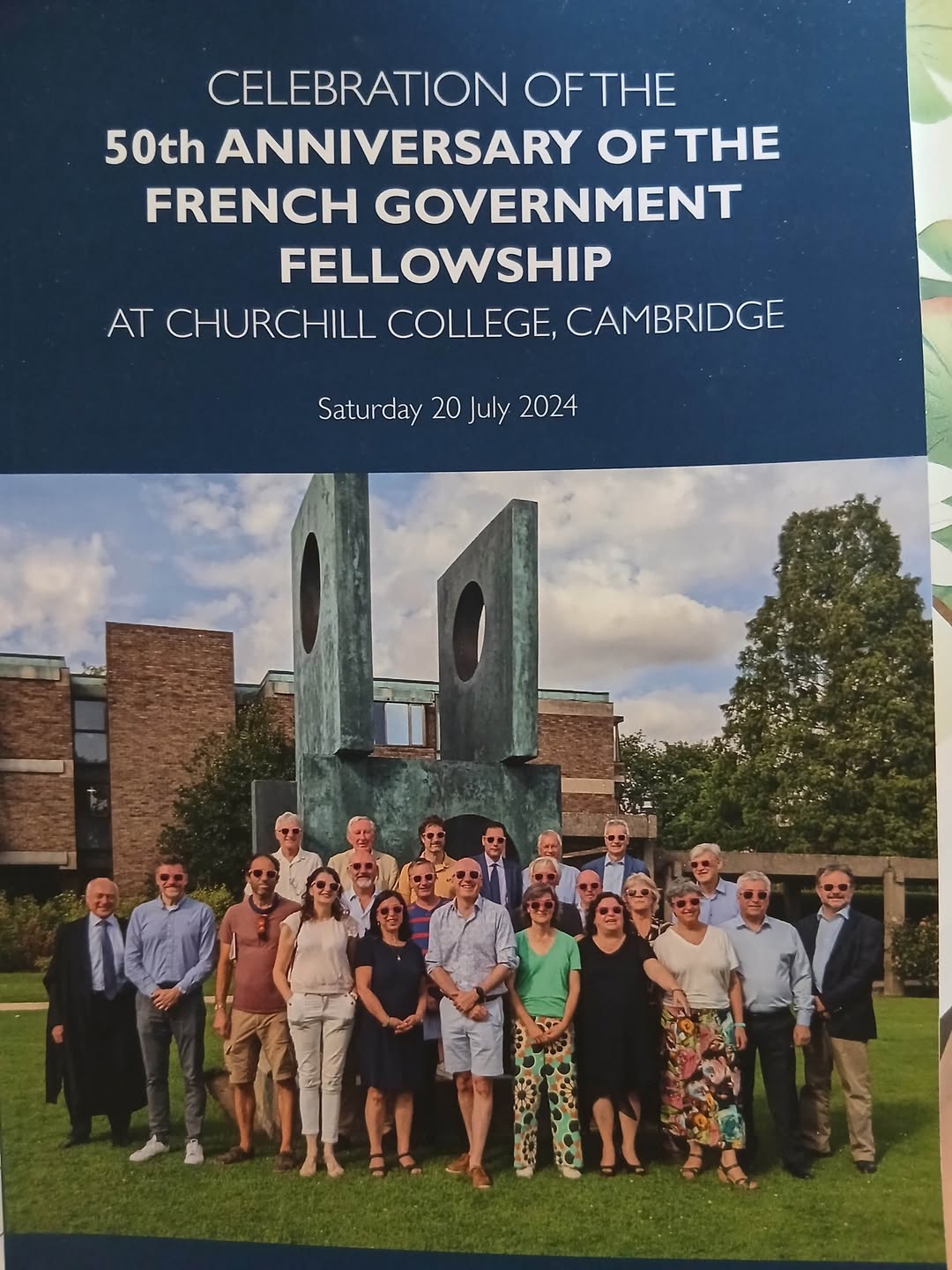
The annual reunion of the recipients of the French Government & Churchill College Fellowships took place on the 25th July 2026.
 The Vice-Master, Churchill College, Adrian Barbrook gave news of current initiatives at the College and Patrick Nédellec, Conseiller pour la science et la technologie, French Embassy set out the current Franco-British scientific exchanges.
Frédéric Thibault- Starzyk, French Fellow 2003, chaired the seminar which included presentations by past and present Fellows about their work at Churchill, and a Churchill College Fellow, introduced the gathering to research being done by members of the College.
Myriam Boussahba, French Fellow 2019, talked about Horizontal Dynamics in and outside Suffragism, Britain 1880-1914, illustrating how the empowerment of women was extended.

Christopher Carcaillet, French Fellow 2023, gave a presentation about his research, Ecosystem ecology, wildfires, and plant biodiversity, which resonated strongly with the audience in view of the wildfires currently active in Europe in this summer of drought.
Anthony Dufour, French Fellow 2026, introduced us to his specialisation, Thermochemical Valorisation of Biomass to Energy and Chemicals, again showing how research is linked to current geo-political and ecological concerns.
Liz Soilleux, Churchill Fellow, Professor at the Department of Pathology, gave a presentation on the use of AI in detecting anomolous features in medical analysis, Can AI Diagnose your Biopsy? Susan Finding, French Fellow 2021, gave an analysis of the Fellowship awards since 1974 looking at the frequency, the research themes, the research centres in France French Fellows were associated with, Countdown: French Government Fellows @ Churchill.
Catherine Jami, French Fellow 2004, first chair of the Standing Committee for Gender Equality in Science (SCGES) talked about her experience in Working for Gender Equality in Science.
Frédéric Thibault-Starzyk, French Fellow 2003, told us about The New High Risk – High Return Research Program in the CNRS, illustrating directions the financing of research is taking and the France 2030 programme.
 To end the day, an enjoyable visit was made to the newly renovated Sheppard Flats, where the French Fellows are housed during their Fellowship and which brought back fond memories to those present. This was followed by the Reception on the Master’s Lawn and Dinner in the Fellows Dining Room, hosted by The Master of Churchill College, Professor Sharon Peacock.
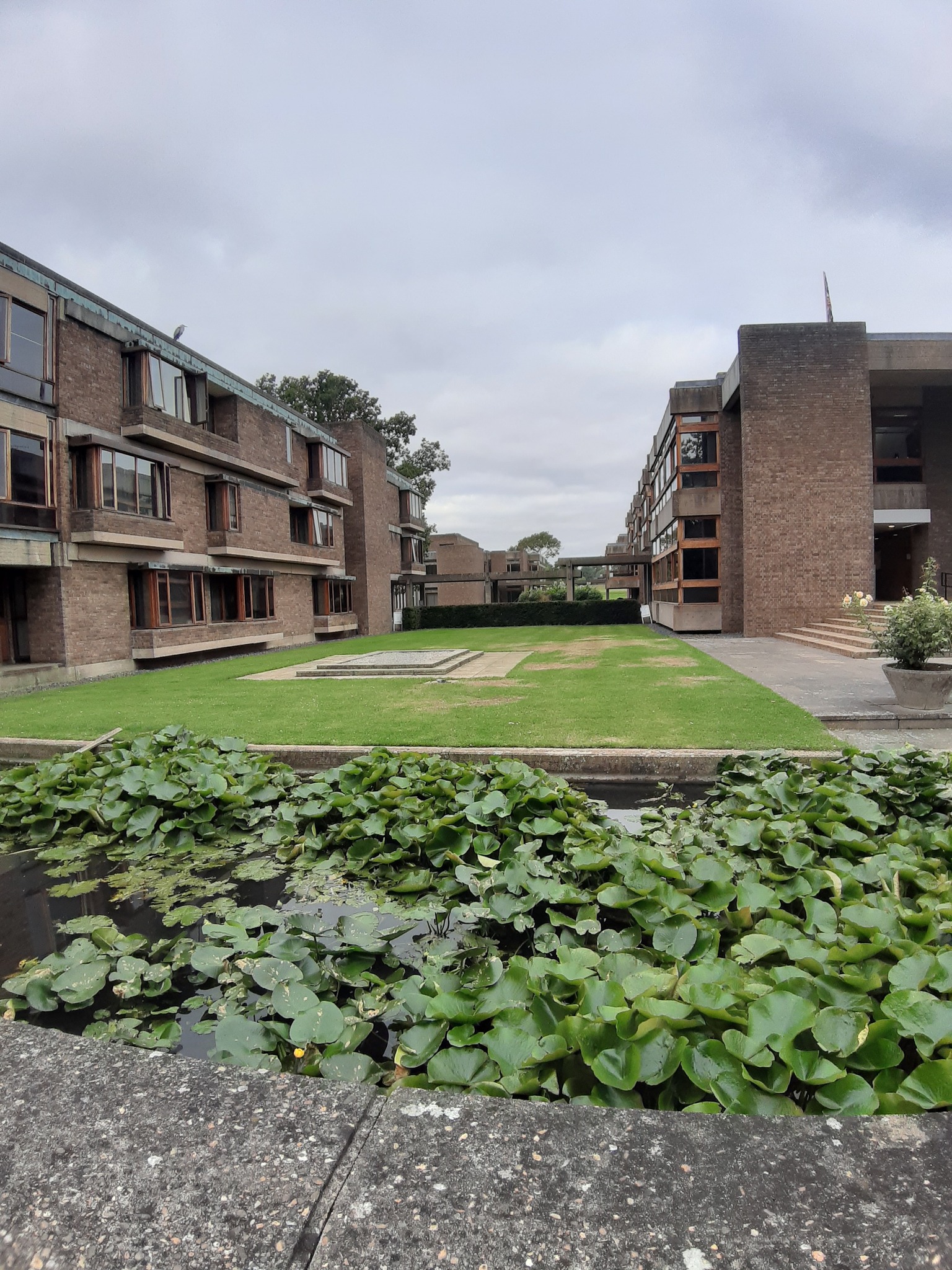
The following morning, a guided visit of the grounds and gardens at Churchill College was led by Paula Laycock, Churchill By-Fellow, author of a book on pioneering landscape architect, Sheila Haywood, who drew up the landscape master plan for the College in 1959.
Next year’s reunion is programmed for the 24th July 2027.
Photos : Susan Finding and Patrick Nedelec, LinkedIn <https://www.linkedin.com/feed/update/urn:li:activity:7487804049484963840/>



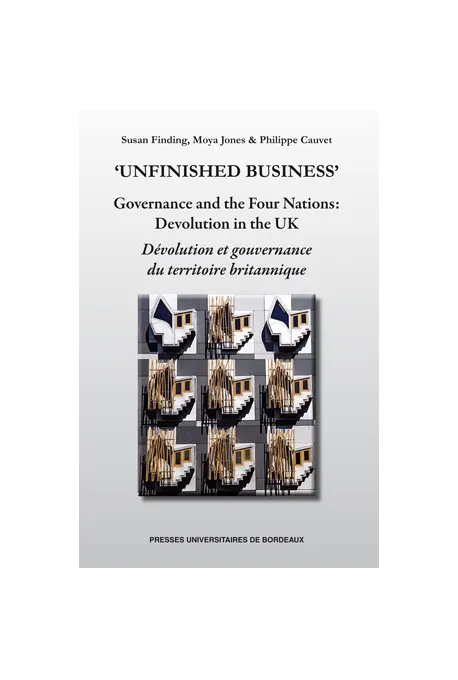 Il y a quinze ans déjà, nous évoquions le processus et l’objectif de la dévolution dans une contribution « Democracy and Devolution : process and object » dans l’ouvrage Dévolution et gouvernance du territoire britannique, « Unfinished Business », Governance and the Four Nations, dir. Susan Finding, Moya Jones & Philippe Cauvet, aux Presses universitaires de Bordeaux.
 « This paper uncovers some of the entangled proceedings which led to the transfer of this significant cache of archives from the ducal seat in Buckinghamshire, England to the philanthropic institution in San Marino, California, one hundred years ago. It explores its acquisition in the contexts of the sellers – the impoverished descendants of the ducal family who, not for the first time, had been forced to dispose of property – and the buyer – Henry E. Huntington, at the height of his reputation as a philanthropic collector. It shows how lesser-known antiquarian dealers helped shape the acquisitions made by the millionaire. It also throws light on the process of discovery, selection, cataloguing, negotiation and shipping such archives and how dealers cooperated – to a greater or lesser extent. »