Churchill College Annual Reunion French Government Fellows & By-Fellows

The annual reunion of the recipients of the French Government & Churchill College Fellowships took place on the 25th July 2026.

The Vice-Master, Churchill College, Adrian Barbrook gave news of current initiatives at the College and Patrick Nédellec, Conseiller pour la science et la technologie, French Embassy set out the current Franco-British scientific exchanges.

Frédéric Thibault- Starzyk, French Fellow 2003, chaired the seminar which included presentations by past and present Fellows about their work at Churchill, and a Churchill College Fellow, introduced the gathering to research being done by members of the College.

Myriam Boussahba, French Fellow 2019, talked about Horizontal Dynamics in and outside Suffragism, Britain 1880-1914, illustrating how the empowerment of women was extended.

Christopher Carcaillet, French Fellow 2023, gave a presentation about his research, Ecosystem ecology, wildfires, and plant biodiversity, which resonated strongly with the audience in view of the wildfires currently active in Europe in this summer of drought.


Anthony Dufour, French Fellow 2026, introduced us to his specialisation, Thermochemical Valorisation of Biomass to Energy and Chemicals, again showing how research is linked to current geo-political and ecological concerns.

Liz Soilleux, Churchill Fellow, Professor at the Department of Pathology, gave a presentation on the use of AI in detecting anomolous features in medical analysis,  Can AI Diagnose your Biopsy?Susan Finding, French Fellow 2021, gave an analysis of the Fellowship awards since 1974 looking at the frequency, the research themes, the research centres in France French Fellows were associated with, Countdown: French Government Fellows @ Churchill.

Catherine Jami, French Fellow 2004, first chair of the Standing Committee for Gender Equality in Science (SCGES) talked about her experience in Working for Gender Equality in Science.

Frédéric Thibault-Starzyk, French Fellow 2003, told us about The New High Risk – High Return Research Program in the CNRS, illustrating directions the financing of research is taking and the France 2030 programme.

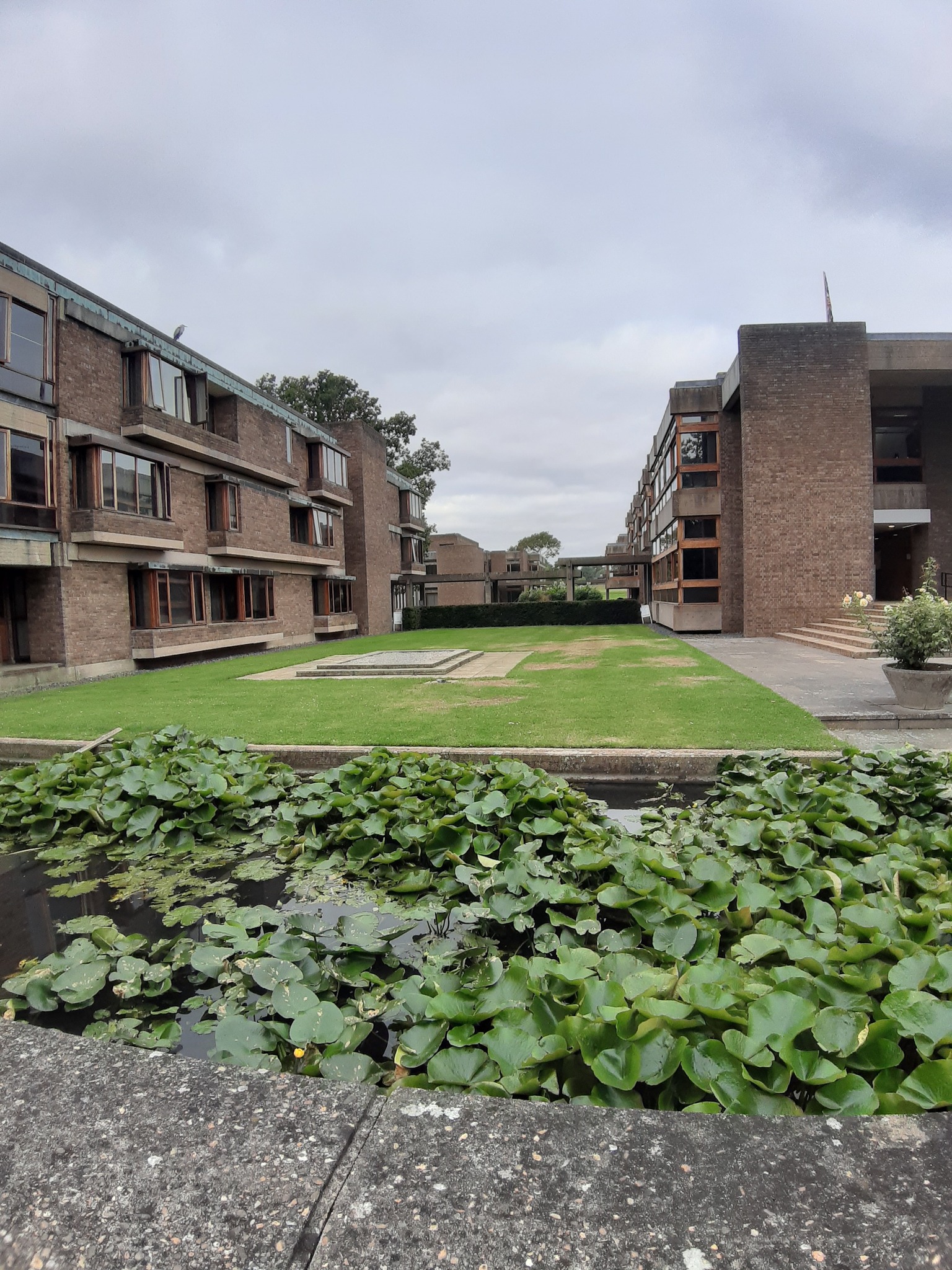
To end the day, an enjoyable visit was made to the newly renovated Sheppard Flats, where the French Fellows are housed during their Fellowship and which brought back fond memories to those present. This was followed by the Reception on the Master’s Lawn and Dinner in the Fellows Dining Room, hosted by The Master of Churchill College, Professor Sharon Peacock.

The following morning, a guided visit of the grounds and gardens at Churchill College was led by Paula Laycock, Churchill By-Fellow, author of a book on pioneering landscape architect, Sheila Haywood, who drew up the landscape master plan for the College in 1959.

Next year’s reunion is programmed for the 24th July 2027.

Photos : Susan Finding and Patrick Nedelec, LinkedIn <https://www.linkedin.com/feed/update/urn:li:activity:7487804049484963840/>

Democracy in action? Directly Elected Mayors in England

In view of the former Mayor of Greater Manchester (2017-2026), Andy Burnham, ‘s new position as Prime Minister (20 July 2026), it’s good to look back.  The consequences of Burnham’s regional outlook on the reorganisation of government in the U.K. are examined by Colin Talbot in a piece published on 10th August 2026, ‘Can Andy Burnham Really Rewire the UK State?‘ (Constitutional Society).

In two pieces published eleven and seven years ago, I looked at the newly created and unfolding role of regional mayors. In 2015, I asked a series of questions, in ‘Democracy in action? Directly Elected Mayors in England’

One way with which to check these incursions has been a continued scaling down of democratic institutions, a return to localism, favoured by activists on the fringes and mainstream political parties: communities and neighbourhoods becoming keywords in political discourse from the 1990s. Is this trend, identified as New Localism, to become a permanent feature of the British political system and part of the “quiet democratic Revolution”? Will the local demos become the new locus for democratic reassertion in the face of globalisation, a training-ground for political leadership, bringing in new generation and quality of political actors, “new sites of power”, “an important new route into politics for people from different backgrounds”? Does scale matter? What is the ideal size for effective political representation? Boundary commissions work ceaselessly to define the demographic-geographic limits for each parliamentary constituency, in an attempt to maintain fairly equal numbers per seat (average 95,000 population and 70,000 voters). Can the debate opposing direct democracy to representative democracy be decided numerically? Is there a cut-off point at which direct elections no longer appear to be attractive to the voter? Might it be said that representative democracy is in crisis and that directly elected mayors are part of a phenomenon that represents a major challenge for national parliaments?

I furthered the reflexion on this new trend in 2019 in ‘Bristol fashion ? Leadership and local politics in England and the power of democratically-elected mayors : an epiphenomenon or a national trend ?’

The power and status of democratically elected mayors in England is a question which is beginning to emerge as a new dimension in national politics in Britain. Whilst the direct election of mayors by cities in the UK was limited to the capital (from 2000), the personalisation of politics appeared to be specific to this example in the personae first of Ken Livingstone then of Boris Johnson. By the end of the 2000s, the New Localism trend, was predicted to become a permanent feature of the British political system and part of the “quiet democratic Revolution”, and it seemed likely that “the local demos [would] become the new locus for democratic reassertion in the face of globalisation” and “an important new route into politics for people from different backgrounds”. What emerged with other major cities directly electing their mayors in the following decades is the continuation and extension of that phenomenon.


France Culture : Brexit et politiques sociales

Politiques sociales, la grande désillusion ?

Mes collègues Louise Dalingwater (PR à Sorbonne Université) et Marc Lenormand (Université de Montpellier Paul-Valéry) ont participé à l’émission du 16 juin 2026 de Cultures Monde, dans la série: Brexit, dix ans de solitude

En votant pour le Brexit, les Britanniques espéraient retrouver une marge pour financer les politiques sociales. Pourtant, les inégalités restent élevées et le NHS est en grande difficulté, alors que les travaillistes contraints par la situation budgétaire optent pour des choix sociaux impopulaires.

https://www.radiofrance.fr/franceculture/podcasts/cultures-monde/politiques-sociales-la-grande-desillusion-4497000


The Sale of the Stowe papers to the Huntington Library (1925)

Forthcoming in the autumn issue of The Book Collector, vol. 75 (3) a follow-up piece to ‘« The smartest bookseller in London’ Leon Kashnor and the Museum Book Store‘,  on ‘The Sale of the Stowe papers to the Huntington Library (1925)’.

The extensive collections of archives, acquired by Henry E. Huntington before his death in 1927, make the Huntington Library ‘one of the most significant repositories in the world for British history’.[1]  They include the Battle Abbey papers, the Ellesmere and Hastings collections, and the Stowe papers. The latter comprise more than four-fifths of the British archive holdings there, ‘a great mass of muniments and personal papers of the families of Temple, Grenville and Brydges’, the ‘largest by far of any [collection] in the Library’, their number estimated at around 350,000 pieces in 1982.[2]

This paper uncovers some of the entangled proceedings which led to the transfer of this significant cache from the ducal seat in Buckinghamshire, England to the philanthropic institution in San Marino, California. It explores the acquisition of this archive from the sellers – the impoverished descendants of the ducal family who, not for the first time, had been forced to dispose of property – to the buyer – Henry E. Huntington, at the height of his reputation as a collector. It shows how lesser-known antiquarian dealers helped shape the acquisitions made by the millionaire and throws light on the process of discovery, acquisition by dealers, cataloguing, negotiation and dispatch of large holdings, one hundred years ago.

[1] https://www.huntington.org/british-history .

[2] George Sherburn, ‘Huntington Library Collections’, The Huntington Library Bulletin, May, no. 1 (1931), p. 93; Henry E. Huntington Library, Guide to British Historical Manuscripts in the Huntington Library (San Marino: Huntington Library, 1982) p. 145; Huntington Library, Report on the Finding Aid for the Stowe Papers. Manuscripts of the Related Grenville, Temple, Brydges, Nugent and O’Conor Families (n. d.).

The smartest bookseller in London’ Leon Kashnor (1879–1955) and the Museum Book Store

Published in The Book Collector, Vol. 74.4, Winter 2025,  ‘The smartest bookseller in London’ Leon Kashnor (1879–1955) and the Museum Book Store’. The following paragraphs from the article introduce the subject.

At both ends of his career, Leon Kashnor received glowing recognition from knowledgeable specialists. H. R. Wagner, who produced the first modern historical bibliography of economic texts, identified him as ‘the smartest bookseller in London’[1] in the 1900s. Ten years after Kashnor’s death and three years after the publication of his seminal The Making of the English Working-Class, E. P. Thompson, spoke of the ‘gifted bookseller’’s ‘splendid collections of early economic theory, English Jacobinism, Chartism, and so on’.[2] Leon Kashnor dealt intensively, but not exclusively, in the niche market of political and social economy. This expertise and specialization led the major collectors of economic history to use Kashnor as their supplier in London of works in English, some almost exclusively.

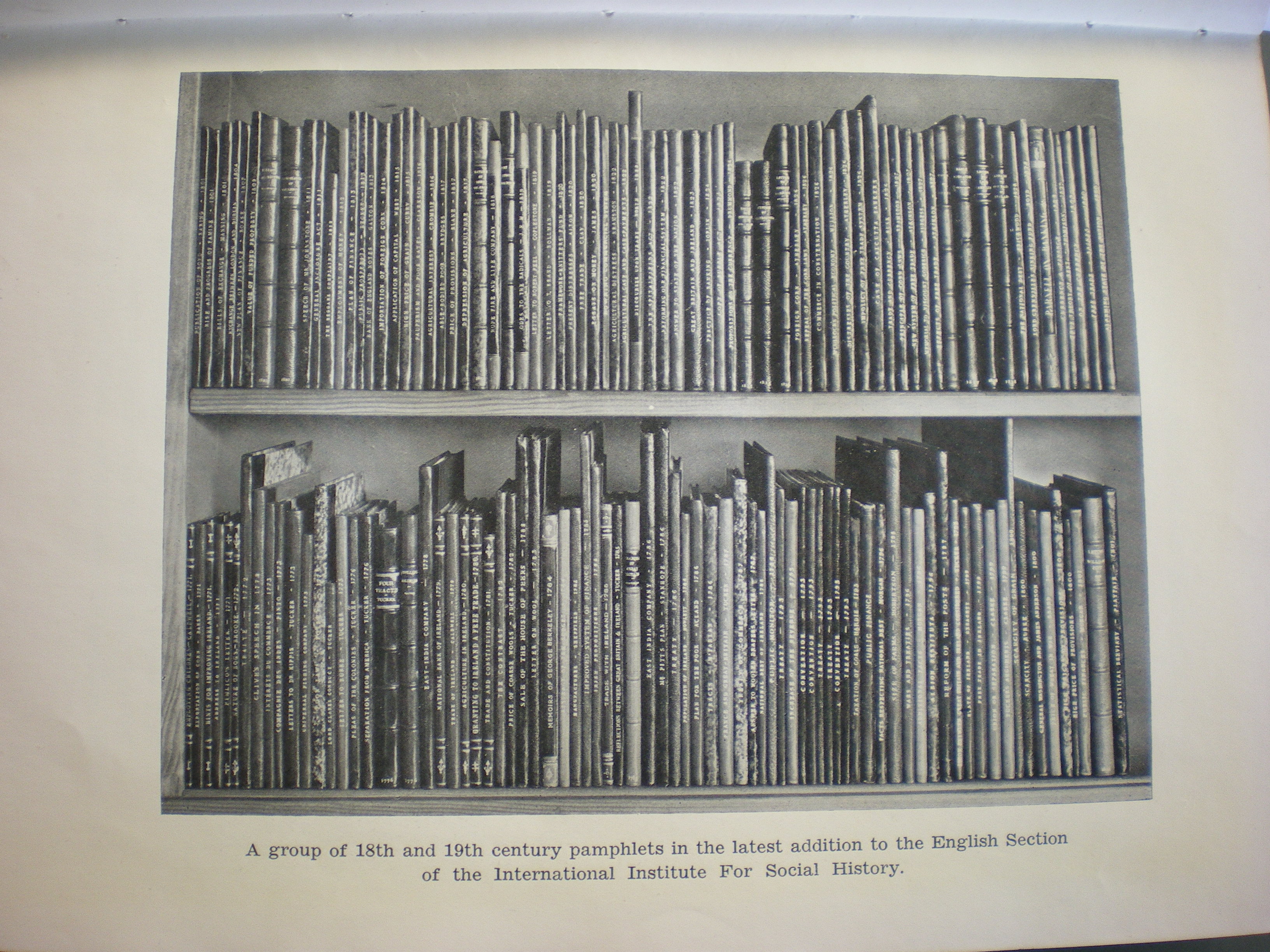
The collections compiled by H. S. Foxwell (the Goldsmiths’-Kress Library at London University and Harvard), E. R. A. Seligman (the Seligman Library at Columbia), Henry Raup Wagner (the British Economics collection at Yale and collections at the Huntington), Auguste Dubois (collection at Poitiers) and Emanuel Leser (collection at Heidelberg) now forming the basis for the major collections of economic literature, all contain works purchased from The Museum Bookstore, some to a large extent (Seligman, Wagner and Dubois). In addition, the Huntington Library acquired whole catalogues or collections of Americana and British history from the same, as did other American university libraries, the International Institute of Social History, Amsterdam, the Feltrinelli Institute, the National Library of Australia. The collections and the correspondence to and from Leon Kashnor found in the archives of these varied collections bear witness to these dealings and to his central position in the specializations in which he dealt.

In view of these remarkable collections in institutions of international repute, it is legitimate to ask why Kashnor is not better known. He is absent from the 1906 list of Founder Members of the Antiquarian Booksellers’ Association.[3] Neither Kashnor, nor the Museum Book Store, appear in the index of the history of the rare and second-hand book trade published in 2006,[4]  nor in a more recent study of ‘Americanists and the Rare Book Market’.[5] It is hoped to remedy this oversight here.

[1]. H. R. Wagner, Bullion to Books: Fifty Years of Business and Pleasure  (Zamorano Club, 1942), p. 99.

[2]. E. P. Thompson ‘History from below’, Times Literary Supplement, (1966) April 7.

[3]. Giles Mandelbrote, Out of Print & Into Profit, A History of the Rare and Secondhand Book Trade in Britain in the Twentieth Century (London: British Library, 2006), Appendix 3, pp. 337–340.

[4]. Out of Print & Into Profit.

[5]. William Reese, Collectors, Booksellers and Libraries: Essays on Americanists and the Rare Book Market (New Haven: Overland Press, 2018).

Un bouquiniste spécialiste d’ouvrages anciens d’économie politique

A paraître dans The Book Collector, Vol. 74.4, Winter 2025,  ‘The smartest bookseller in London’ Leon Kashnor (1879–1955) and the Museum Book Store’.

Cet article est consacré au bouquiniste qui a fourni de nombreux exemplaires d’ouvrages anciens aux collectionneurs qui ont fondé le corpus d’économie politique dans les collections des universités de Harvard, Columbia, Londres, The Huntington Library, l’IISH (Amsterdam), de Heidelberg et Poitiers.

French Fellows’ Seminar Churchill College, 25-27 July 2025

As a regular at the annual reunion of French Fellows’ elected to Churchill College, I attended the French Fellows’ Seminar held on 25-27 July 2025 in Cambridge.

The meeting kicked off with Dinner at High Table on Friday 25 July 2025. Former fellows share the privilege of being able to invite guests to share in the occasion with its formal procedures softened by the friendly informal atmosphere where mingling and chatting is encouraged.


Accomodation was provided by the College in Cowan Court.

Following Breakfast in the Hall, on Saturday 26th July, the Seminar was opened by Adrian Barbrook, Vice-Master, fresh from his ‘tour de France’ in the summer. Ludovic Drouin, the Scientific attaché represented the Embassy.

Frédéric Thibault- Starzyk (CNRS), French Fellow 2003, who, along with Anny King, organized the meeting, introduced the speakers, Nathalie Berny (Maison française d’Oxford), Jean-François Roch (ENS Saclay) French Fellow 2017, Damir Juric (CNRS) French Fellow 2021-22 (pictured here), Adrian Liston (St. Catharine’s, Cambridge, former Senior Research Fellow at Churchill College) and David Holcman (ENS Paris) French Fellow 2015, who spoke on topics ranging from fluid dynamics to AI and anesthesia, environmental advocacy to immune system diversity.

Lunch was provided in the Fellows’ Dining Room, where the Fellows were honoured to be joined by the Master, Professor Sharon Peacock (Professor of Microbiology and Public Health), who was able to take time out of her busy schedule to sit in on the afternoon’s talks. A business meeting followed at which the groups’ projects for the future were discussed and future meetings set : in Paris for an informal evening in November 2025, and at Churchill College in July 2026.

The  pre-dinner reception on the Master’s lawn and High Table were and presided over by Professor Peacock at which she spoke warmly of the importance of wide horizons.


To end the weekend, on Sunday morning,  Barry Phipps gave us a visit of the Bill Brown Creative Workshops, followed by lunch at The Punter before going our separate ways.

A History of Collections, the History of Economics as an Academic Discipline – A Cambridge Field Study

Vient de paraître : ‘The history of collections, the history of economics as an academic discipline: a Cambridge field study’, in Anny King & Paula Laycock (eds.) Celebration of the 50th Anniversary of the French Government Fellowship at Churchill College, Cambridge, Saturday 20th July 2024, Churchill College, Cambridge, with the kind support of the French Embassy, London, pp.76-80.

(See the account of the 2024 meeting here)

Extract from the opening and the closing paragraphs of the paper written for the occasion:

« Following the serendipitous discovery of a first edition of Adam Smith’s Wealth of Nations in Poitiers University Library Special Collections in 2009, I embarked upon a project which sought to unravel the whys, hows and wherefores of a collection of early rare economic books in English at Poitiers. The Humanities project for which I was awarded the French Government Fellowship at Churchill College for 2020-2021 resulted from this quest and focused on issues of collection formation and the sourcing of rare economic history books with reference to significant collections and collectors, networking and nodal connections in the world of antiquarian books and academic scholarship in the late nineteenth and early twentieth centuries, the very period during which Winston Churchill was collecting books about Napoleon.[1]

[1] Allen Packwood, “France and the French – A Tale of Two statesmen – CHURCHILL AND NAPOLEON”, Finest Hour, 157, Winter 2012-13, Page 14. International Churchill Society, February 28, 2015.

(…)

The intellectual environment at Churchill, the access to archives and libraries in Cambridge and London, the tranquil walks from the College to the Library and the other colleges, the quiet, studious and congenial setting, the social occasions – including strawberries and champagne on the Cam – provided the stimuli needed not only to explore Foxwell’s work, but to kick-start the writing of a book. It was in Sheppard Flats, that I was able to clearly establish the structure of the book resulting from this project, provisionally entitled A Wealth of Rare Books.The Making of the Economic History Corpus.  Academics, Bibliographers, Collectors and Dealers in Political Economy in France, Britain, the United States and Germany, 1880s-1930s, and where I wrote the introduction and several chapters in the spring – summer of 2021. The [first draft of the] manuscript, completed in spring 2024, along with several articles, has been submitted for publication. The motivation and encouragement provided at Churchill were crucial to achieving this result. (…)

Les collections remarquables des Bibliothèques universitaires de Poitiers

Les collections remarquables des Bibliothèques universitaires de Poitiers.
Histoire de la collection. Histoire des collections du Service des collections remarquables.

Dans le cadre de la célébration des 50 ans du Service des collections remarquables et du centenaire du legs Auguste Dubois

Journée d’études les 3-4 avril 2025 à l’Université de Poitiers

Proposée par le Service des collections remarquables (Bibliothèques de l’Université de Poitiers),le MIMMOC, l’Institut d’Histoire du Droit, le FORELLIS

Programme:

Jeudi 3 avril  Faculté de Droit (Amphi Hardouin 14h -17h30)

 Mot d’Accueil : Marianne Faure-Abbad, Mme le Doyen de la Faculté de Droit, Myriam Marcil, Directrice des Bibliothèques de l’Université de Poitiers

L’histoire du Service des collections remarquables et de ses collections

14h. Jean-Pierre Bonnet (Bibliothèques de l’Université de Poitiers) – L’Université de Poitiers et ses livres, de la restauration du premier Empire (1804/1810) à aujourd’hui (2025)

14h30. Anne-Sophie Traineau-Durozoy (Bibliothèques de l’Université de Poitiers) – Le Service des collections remarquables aujourd’hui : état des lieux, enjeux et perspectives

15h. Clémentine Ordzinski et Mélanie Blicq (Médiathèque François-Mitterrand de Poitiers) – Bibliothèques universitaire et municipale de Poitiers : histoires de voisinage

***

16h. Jérôme Grévy (CRIHAM) – Les almanachs, un instrument de politisation au XIXe siècle

16h30. Adrien Lauba (Institut d’Histoire du Droit) – Arthur Girault (1865-1931), Doyen de la Faculté de Droit de Poitiers, théoricien de Droit colonial et donateur du fonds éponyme

17h. Susan Finding (MIMMOC) – Auguste Dubois (1869-1935), Professeur de la Faculté de Droit, testataire du Fonds Dubois.


Vendredi 4 avril 9h-17h30 (Campus)   UFR Lettres et Langues (Amphi Varda 9h-17h)

Mot d’accueil : Marion Picker, Directrice adjointe du MIMMOC, Licia Bagini, Responsable des Relations internationales de l’UFR Lettres et Langes

Autour du Fonds Dubois

9h. Anne-Sophie Traineau-Durozoy (Bibliothèques de l’Université de Poitiers) – Le Fonds Dubois, de 1935 à aujourd’hui

9h30. Elodie Peyrol-Kleiber (MIMMOC) – Le Fonds Dubois comme outil d’enseignement : débats sur la pauvreté dans les îles britanniques du XVIIIe siècle

10h Pierre Le Masne (LéP) – Le Fonds Dubois et la pensée économique française au XVIIIe siècle

Collections patrimoniales

11h00 Karen Attar, Curator, Senate House Library, Université de Londres –                                             The opportunities and challenges of curating rare books

An Interview with Karen Attar, SHL Curator of Rare Books - Institute of ...

Collections scientifiques

13h30 Séminaire « Peaux et merveilles » Séquence 3 Les écorchés  Organisé par : Myriam Marrache-Gouraud (FoReLLIS) et Jérôme Laubner (U. Montpellier, IRCL)

Invités Dominique Brancher, Yale University, Irène Salas, EHESS-Oxford University, Stéphane Bikialo, (FoReLLIS), Université de Poitiers

 Service des collections remarquables (La Ruche, Bâtiment A2)

16h30 Anne-Sophie Traineau-Durozoy (Bibliothèques de l’Université de Poitiers) Présentation d’ouvrages choisis