
Published in The Book Collector, Vol. 74.4, Winter 2025, ‘The smartest bookseller in London’ Leon Kashnor (1879–1955) and the Museum Book Store’. The following paragraphs from the article introduce the subject.
 At both ends of his career, Leon Kashnor received glowing recognition from knowledgeable specialists. H. R. Wagner, who produced the first modern historical bibliography of economic texts, identified him as ‘the smartest bookseller in London’[1] in the 1900s. Ten years after Kashnor’s death and three years after the publication of his seminal The Making of the English Working-Class, E. P. Thompson, spoke of the ‘gifted bookseller’’s ‘splendid collections of early economic theory, English Jacobinism, Chartism, and so on’.[2] Leon Kashnor dealt intensively, but not exclusively, in the niche market of political and social economy. This expertise and specialization led the major collectors of economic history to use Kashnor as their supplier in London of works in English, some almost exclusively.
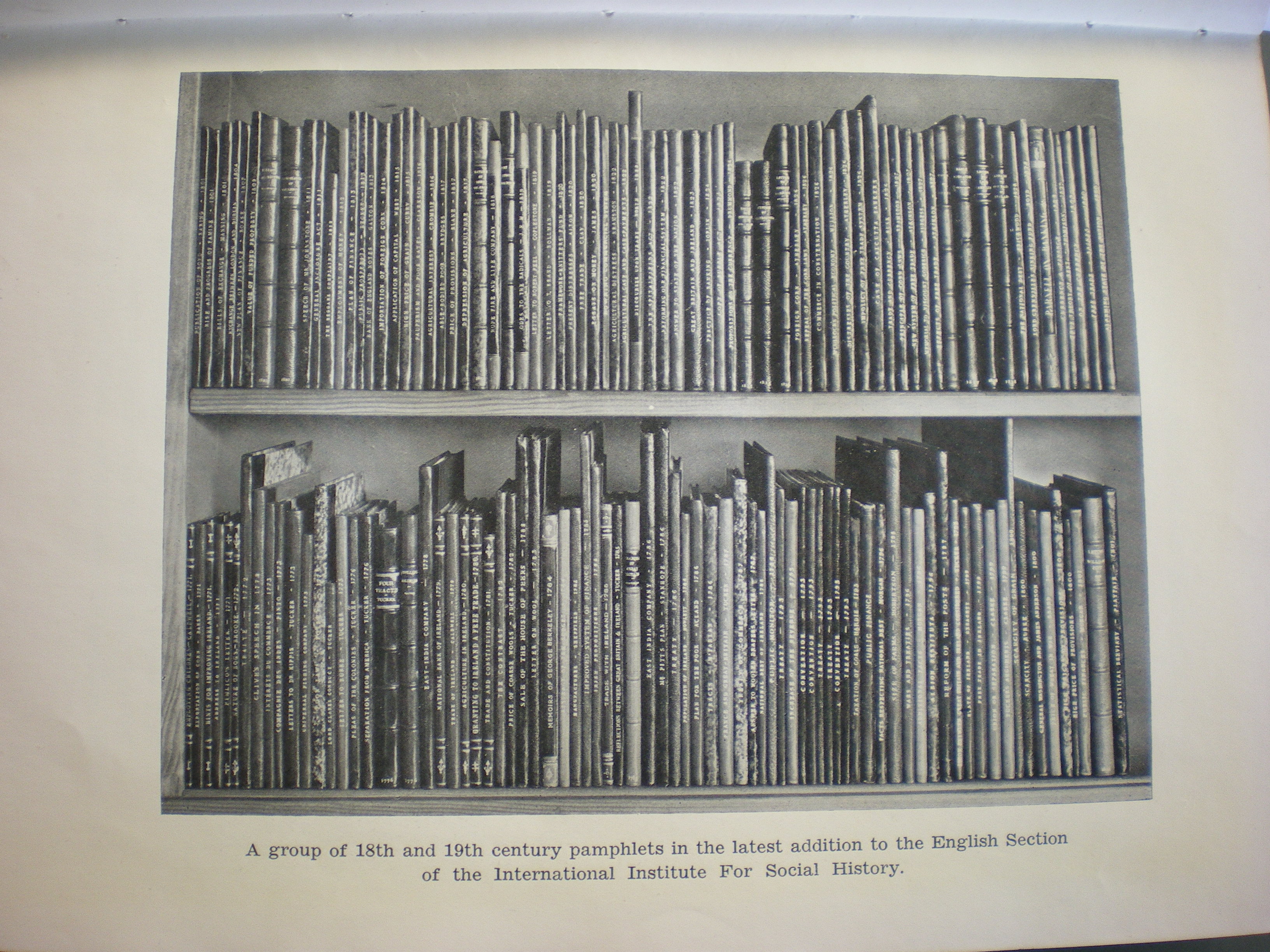
The collections compiled by H. S. Foxwell (the Goldsmiths’-Kress Library at London University and Harvard), E. R. A. Seligman (the Seligman Library at Columbia), Henry Raup Wagner (the British Economics collection at Yale and collections at the Huntington), Auguste Dubois (collection at Poitiers) and Emanuel Leser (collection at Heidelberg) now forming the basis for the major collections of economic literature, all contain works purchased from The Museum Bookstore, some to a large extent (Seligman, Wagner and Dubois). In addition, the Huntington Library acquired whole catalogues or collections of Americana and British history from the same, as did other American university libraries, the International Institute of Social History, Amsterdam, the Feltrinelli Institute, the National Library of Australia. The collections and the correspondence to and from Leon Kashnor found in the archives of these varied collections bear witness to these dealings and to his central position in the specializations in which he dealt.
In view of these remarkable collections in institutions of international repute, it is legitimate to ask why Kashnor is not better known. He is absent from the 1906 list of Founder Members of the Antiquarian Booksellers’ Association.[3] Neither Kashnor, nor the Museum Book Store, appear in the index of the history of the rare and second-hand book trade published in 2006,[4] nor in a more recent study of ‘Americanists and the Rare Book Market’.[5] It is hoped to remedy this oversight here.
[1]. H. R. Wagner, Bullion to Books: Fifty Years of Business and Pleasure (Zamorano Club, 1942), p. 99.
[2]. E. P. Thompson ‘History from below’, Times Literary Supplement, (1966) April 7.
[3]. Giles Mandelbrote, Out of Print & Into Profit, A History of the Rare and Secondhand Book Trade in Britain in the Twentieth Century (London: British Library, 2006), Appendix 3, pp. 337–340.
[4]. Out of Print & Into Profit.
[5]. William Reese, Collectors, Booksellers and Libraries: Essays on Americanists and the Rare Book Market (New Haven: Overland Press, 2018).