The smartest bookseller in London’ Leon Kashnor (1879–1955) and the Museum Book Store

Published in The Book Collector, Vol. 74.4, Winter 2025,  ‘The smartest bookseller in London’ Leon Kashnor (1879–1955) and the Museum Book Store’. The following paragraphs from the article introduce the subject.

At both ends of his career, Leon Kashnor received glowing recognition from knowledgeable specialists. H. R. Wagner, who produced the first modern historical bibliography of economic texts, identified him as ‘the smartest bookseller in London’[1] in the 1900s. Ten years after Kashnor’s death and three years after the publication of his seminal The Making of the English Working-Class, E. P. Thompson, spoke of the ‘gifted bookseller’’s ‘splendid collections of early economic theory, English Jacobinism, Chartism, and so on’.[2] Leon Kashnor dealt intensively, but not exclusively, in the niche market of political and social economy. This expertise and specialization led the major collectors of economic history to use Kashnor as their supplier in London of works in English, some almost exclusively.

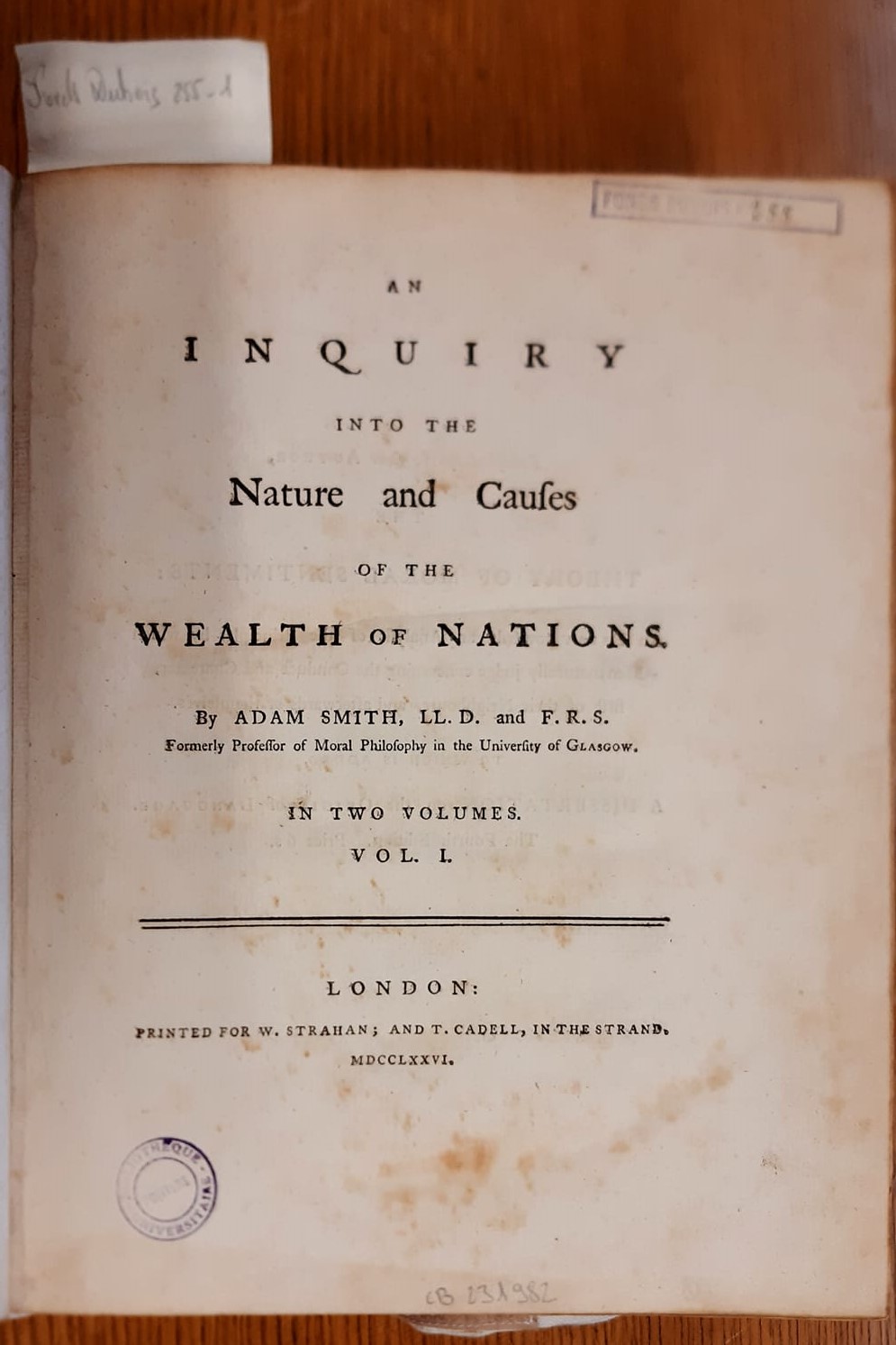
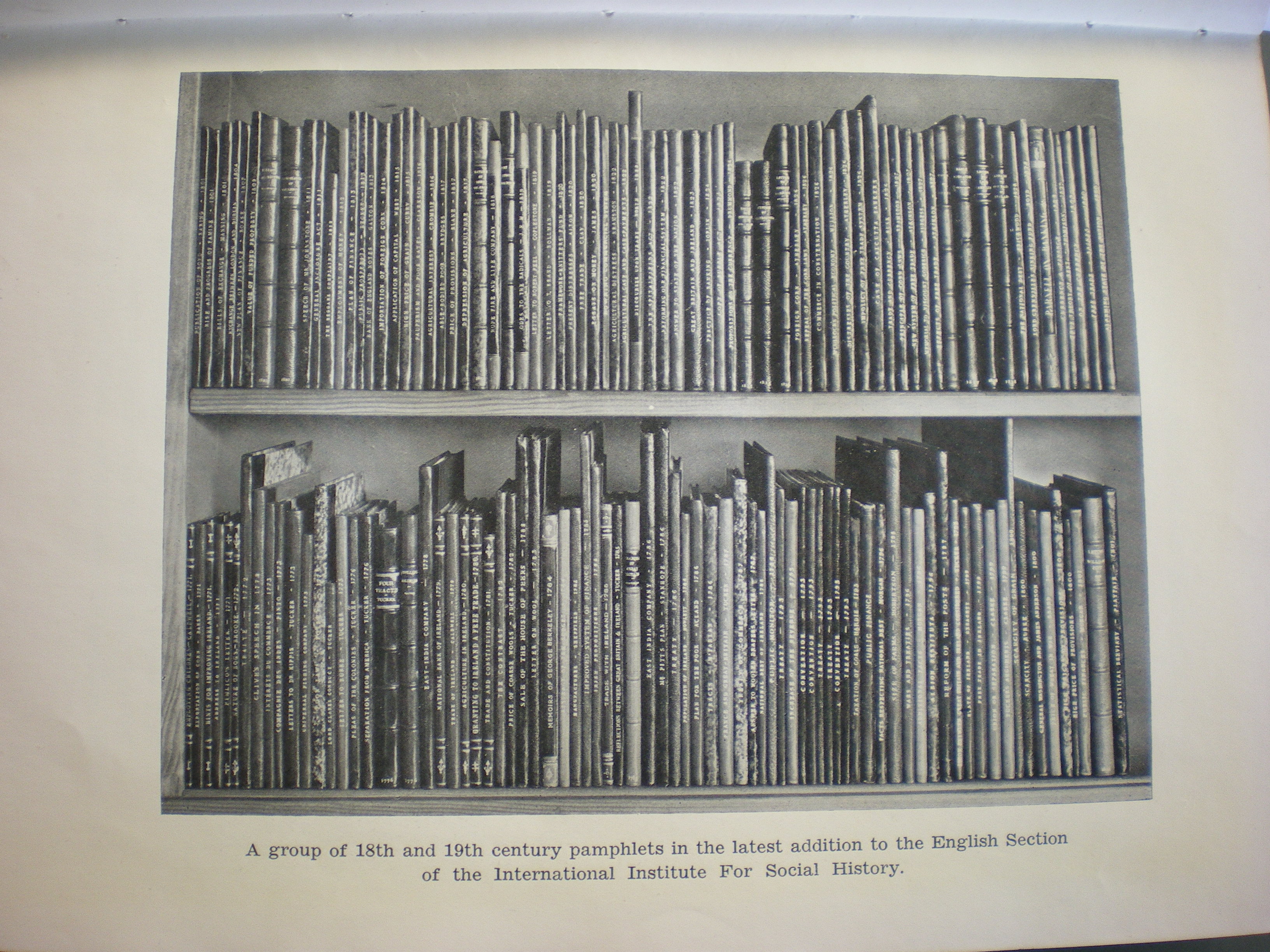
The collections compiled by H. S. Foxwell (the Goldsmiths’-Kress Library at London University and Harvard), E. R. A. Seligman (the Seligman Library at Columbia), Henry Raup Wagner (the British Economics collection at Yale and collections at the Huntington), Auguste Dubois (collection at Poitiers) and Emanuel Leser (collection at Heidelberg) now forming the basis for the major collections of economic literature, all contain works purchased from The Museum Bookstore, some to a large extent (Seligman, Wagner and Dubois). In addition, the Huntington Library acquired whole catalogues or collections of Americana and British history from the same, as did other American university libraries, the International Institute of Social History, Amsterdam, the Feltrinelli Institute, the National Library of Australia. The collections and the correspondence to and from Leon Kashnor found in the archives of these varied collections bear witness to these dealings and to his central position in the specializations in which he dealt.

In view of these remarkable collections in institutions of international repute, it is legitimate to ask why Kashnor is not better known. He is absent from the 1906 list of Founder Members of the Antiquarian Booksellers’ Association.[3] Neither Kashnor, nor the Museum Book Store, appear in the index of the history of the rare and second-hand book trade published in 2006,[4]  nor in a more recent study of ‘Americanists and the Rare Book Market’.[5] It is hoped to remedy this oversight here.

[1]. H. R. Wagner, Bullion to Books: Fifty Years of Business and Pleasure  (Zamorano Club, 1942), p. 99.

[2]. E. P. Thompson ‘History from below’, Times Literary Supplement, (1966) April 7.

[3]. Giles Mandelbrote, Out of Print & Into Profit, A History of the Rare and Secondhand Book Trade in Britain in the Twentieth Century (London: British Library, 2006), Appendix 3, pp. 337–340.

[4]. Out of Print & Into Profit.

[5]. William Reese, Collectors, Booksellers and Libraries: Essays on Americanists and the Rare Book Market (New Haven: Overland Press, 2018).

Un bouquiniste spécialiste d’ouvrages anciens d’économie politique

A paraître dans The Book Collector, Vol. 74.4, Winter 2025,  ‘The smartest bookseller in London’ Leon Kashnor (1879–1955) and the Museum Book Store’.

Cet article est consacré au bouquiniste qui a fourni de nombreux exemplaires d’ouvrages anciens aux collectionneurs qui ont fondé le corpus d’économie politique dans les collections des universités de Harvard, Columbia, Londres, The Huntington Library, l’IISH (Amsterdam), de Heidelberg et Poitiers.

French Fellows’ Seminar Churchill College, 25-27 July 2025

As a regular at the annual reunion of French Fellows’ elected to Churchill College, I attended the French Fellows’ Seminar held on 25-27 July 2025 in Cambridge.

The meeting kicked off with Dinner at High Table on Friday 25 July 2025. Former fellows share the privilege of being able to invite guests to share in the occasion with its formal procedures softened by the friendly informal atmosphere where mingling and chatting is encouraged.


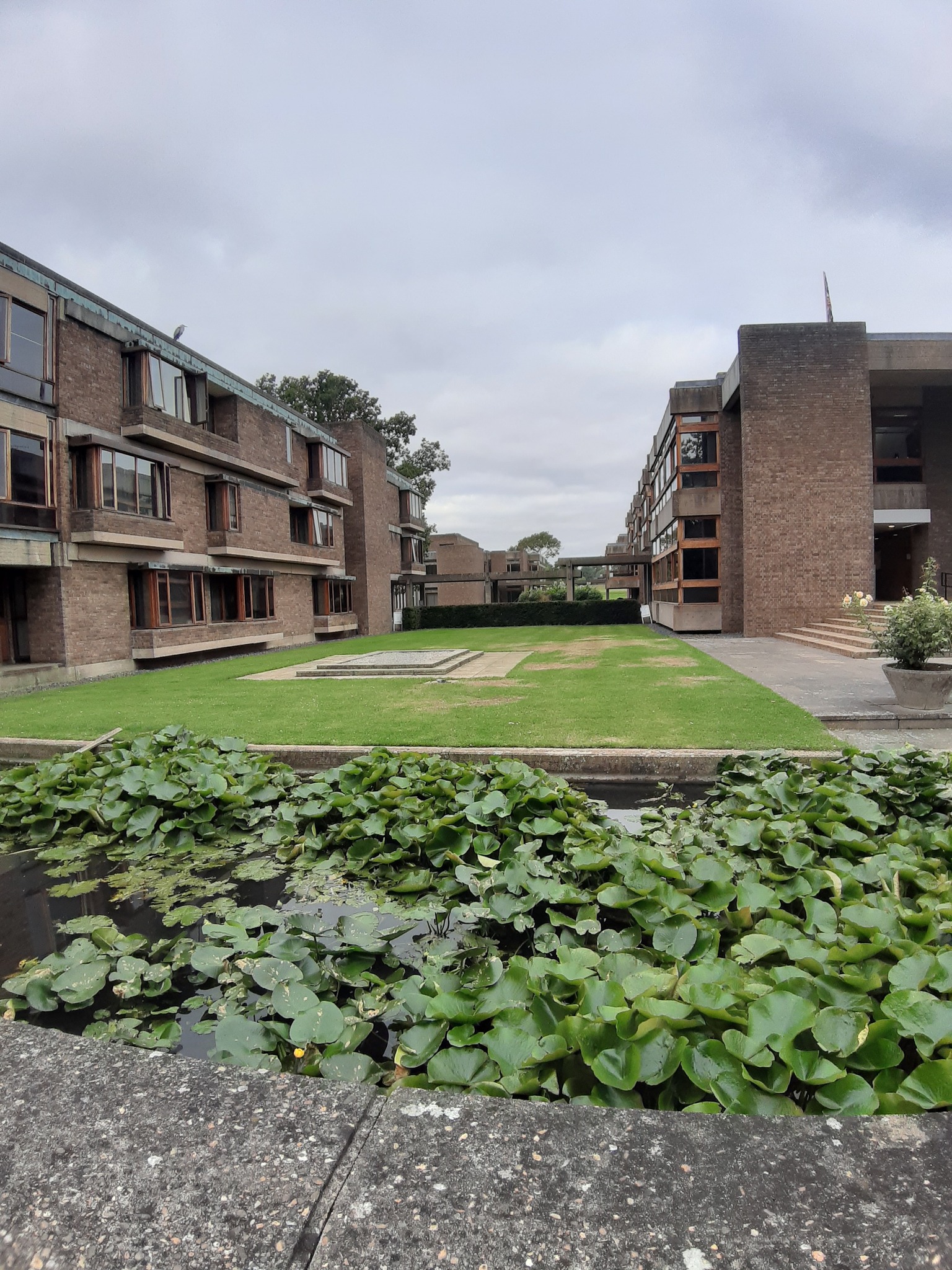
Accomodation was provided by the College in Cowan Court.

Following Breakfast in the Hall, on Saturday 26th July, the Seminar was opened by Adrian Barbrook, Vice-Master, fresh from his ‘tour de France’ in the summer. Ludovic Drouin, the Scientific attaché represented the Embassy.

Frédéric Thibault- Starzyk (CNRS), French Fellow 2003, who, along with Anny King, organized the meeting, introduced the speakers, Nathalie Berny (Maison française d’Oxford), Jean-François Roch (ENS Saclay) French Fellow 2017, Damir Juric (CNRS) French Fellow 2021-22 (pictured here), Adrian Liston (St. Catharine’s, Cambridge, former Senior Research Fellow at Churchill College) and David Holcman (ENS Paris) French Fellow 2015, who spoke on topics ranging from fluid dynamics to AI and anesthesia, environmental advocacy to immune system diversity.

Lunch was provided in the Fellows’ Dining Room, where the Fellows were honoured to be joined by the Master, Professor Sharon Peacock (Professor of Microbiology and Public Health), who was able to take time out of her busy schedule to sit in on the afternoon’s talks. A business meeting followed at which the groups’ projects for the future were discussed and future meetings set : in Paris for an informal evening in November 2025, and at Churchill College in July 2026.

The  pre-dinner reception on the Master’s lawn and High Table were and presided over by Professor Peacock at which she spoke warmly of the importance of wide horizons.


To end the weekend, on Sunday morning,  Barry Phipps gave us a visit of the Bill Brown Creative Workshops, followed by lunch at The Punter before going our separate ways.

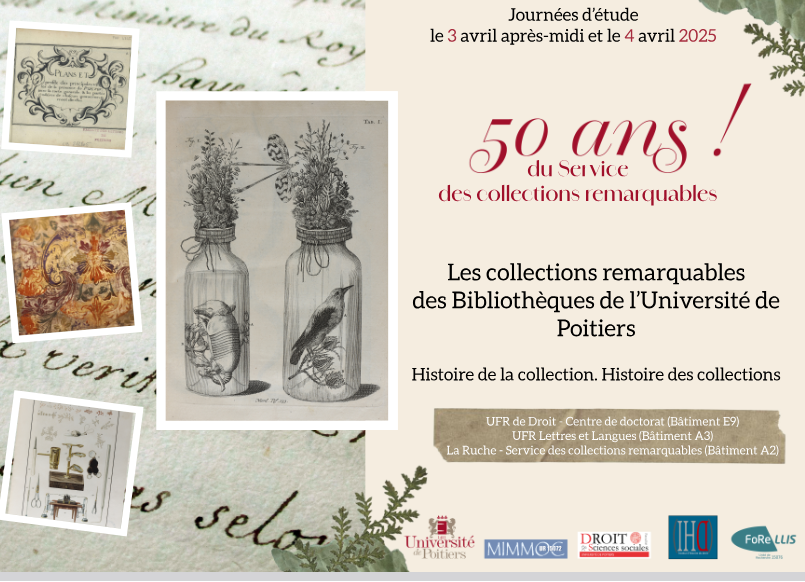
Les collections remarquables des Bibliothèques universitaires de Poitiers

Les collections remarquables des Bibliothèques universitaires de Poitiers.
Histoire de la collection. Histoire des collections du Service des collections remarquables.

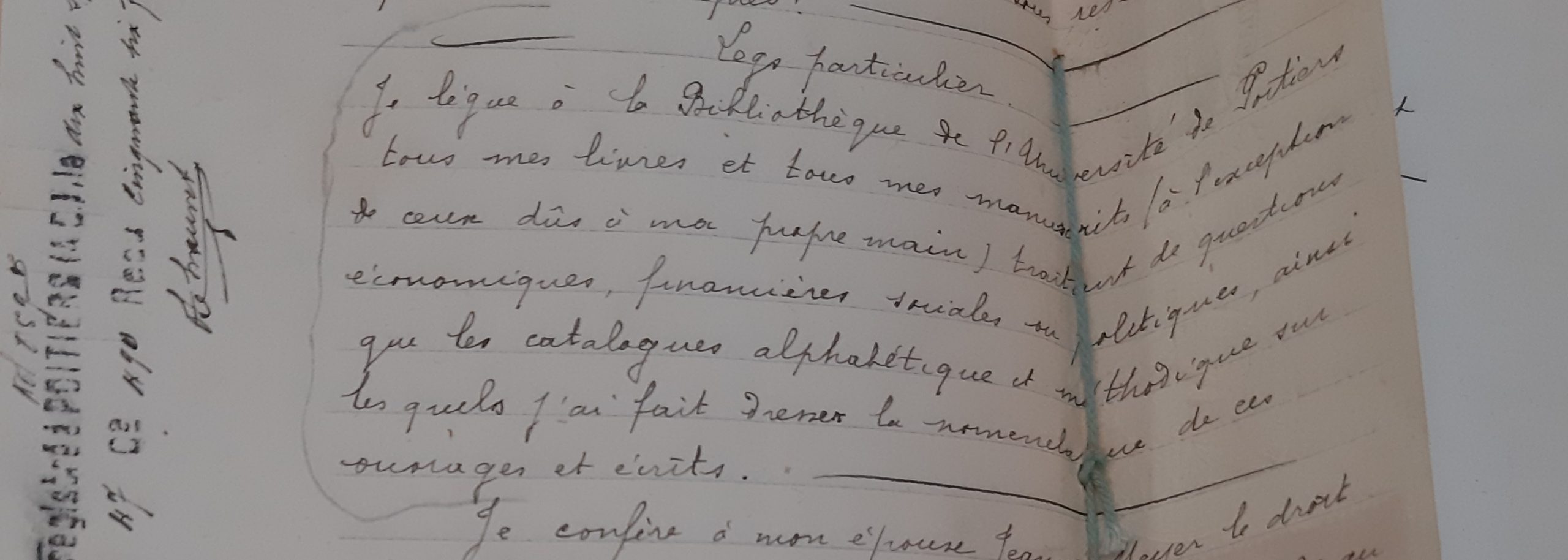
Dans le cadre de la célébration des 50 ans du Service des collections remarquables et du centenaire du legs Auguste Dubois

Journée d’études les 3-4 avril 2025 à l’Université de Poitiers

Proposée par le Service des collections remarquables (Bibliothèques de l’Université de Poitiers),le MIMMOC, l’Institut d’Histoire du Droit, le FORELLIS

Programme:

Jeudi 3 avril  Faculté de Droit (Amphi Hardouin 14h -17h30)

 Mot d’Accueil : Marianne Faure-Abbad, Mme le Doyen de la Faculté de Droit, Myriam Marcil, Directrice des Bibliothèques de l’Université de Poitiers

L’histoire du Service des collections remarquables et de ses collections

14h. Jean-Pierre Bonnet (Bibliothèques de l’Université de Poitiers) – L’Université de Poitiers et ses livres, de la restauration du premier Empire (1804/1810) à aujourd’hui (2025)

14h30. Anne-Sophie Traineau-Durozoy (Bibliothèques de l’Université de Poitiers) – Le Service des collections remarquables aujourd’hui : état des lieux, enjeux et perspectives

15h. Clémentine Ordzinski et Mélanie Blicq (Médiathèque François-Mitterrand de Poitiers) – Bibliothèques universitaire et municipale de Poitiers : histoires de voisinage

***

16h. Jérôme Grévy (CRIHAM) – Les almanachs, un instrument de politisation au XIXe siècle

16h30. Adrien Lauba (Institut d’Histoire du Droit) – Arthur Girault (1865-1931), Doyen de la Faculté de Droit de Poitiers, théoricien de Droit colonial et donateur du fonds éponyme

17h. Susan Finding (MIMMOC) – Auguste Dubois (1869-1935), Professeur de la Faculté de Droit, testataire du Fonds Dubois.


Vendredi 4 avril 9h-17h30 (Campus)   UFR Lettres et Langues (Amphi Varda 9h-17h)

Mot d’accueil : Marion Picker, Directrice adjointe du MIMMOC, Licia Bagini, Responsable des Relations internationales de l’UFR Lettres et Langes

Autour du Fonds Dubois

9h. Anne-Sophie Traineau-Durozoy (Bibliothèques de l’Université de Poitiers) – Le Fonds Dubois, de 1935 à aujourd’hui

9h30. Elodie Peyrol-Kleiber (MIMMOC) – Le Fonds Dubois comme outil d’enseignement : débats sur la pauvreté dans les îles britanniques du XVIIIe siècle

10h Pierre Le Masne (LéP) – Le Fonds Dubois et la pensée économique française au XVIIIe siècle

Collections patrimoniales

11h00 Karen Attar, Curator, Senate House Library, Université de Londres –                                             The opportunities and challenges of curating rare books

An Interview with Karen Attar, SHL Curator of Rare Books - Institute of ...

Collections scientifiques

13h30 Séminaire « Peaux et merveilles » Séquence 3 Les écorchés  Organisé par : Myriam Marrache-Gouraud (FoReLLIS) et Jérôme Laubner (U. Montpellier, IRCL)

Invités Dominique Brancher, Yale University, Irène Salas, EHESS-Oxford University, Stéphane Bikialo, (FoReLLIS), Université de Poitiers

 Service des collections remarquables (La Ruche, Bâtiment A2)

16h30 Anne-Sophie Traineau-Durozoy (Bibliothèques de l’Université de Poitiers) Présentation d’ouvrages choisis

50th Anniversary of Churchill College French Government Fellowships

On Saturday July 20th, 2024 past and present French government Fellows of Churchill College assembled to celebrate the 50th anniversary of the scheme, in the presence of representatives of the College, and the French Embassy in London.

They included members of the Commissariat à l’Energie Atomique (CEA-Saclay), the French National Centre for Scientific Research (CNRS), the Ecole Pratique des Hautes Etudes (EPHE), the Grenoble Institute of Technology (Grenoble INP), the Institut national de recherche pour l’agriculture, l’alimentation et l’environnement (INSAE), the Institut national des sciences appliquées (INSA), the Institut national de la santé et de la recherche médicale (INSERM), and the Universities of Evry,  Paris, Poitiers (yours truly), and Toulouse.

The Fellows were welcomed by the current and former Vice-Masters, Adrian Barbrook and Ken Skiddle, and Professor Dame Athene Donald, Master of the College, seen here addressing the assembled Fellows and guests at dinner.

The current and former Scientific Counsellors at the French Embassy, Minh-Hà Pham (seated to the left of the Master) and Jean Arlat, along with Ludovic Drouin, Attaché Scientifique, were actively involved in the day’s proceedings. Talks on the impact of their stay at Churchill on their research were given by seven former Fellows, all of whom stressed the welcoming and convivial academic environment provided by the college.

A drinks reception was held on the Fellows’ Lawn followed by a Formal Dinner for sixty assembled Fellows – French Government Fellows and their families and guests, and Churchill Fellows who had welcomed them with academic comradeship and personal friendships.

For information about the French Government Fellowships. Enquiries and applications should be made to the Scientific Counsellor at the French Embassy in London. For this and other bilateral French-British programmes.

Exploring the collection of Emanuel Leser, Professor, Heidelberg University

A new addition to the project on collectors and collections of antiquarian books on political economy warrants the exploration of the University of Heidelberg Library Special Collections. For that purpose, a week’s mission (27 November to 1st Dec. 2023) has been organised.


Emanuel Leser (1849-1914) taught at Heidelberg from 1879. As a young ‘docent’, he had E. R. A. Seligman (Columbia) as a pupil, who recounts that it was Leser who passed on his love of old books


The books and the collection as a whole bear the hallmarks of a working collection. The library contains every work of importance published in English from the 17th century on (Malynes, Mun, Petty, …) to the works of the Classical School (Smith, Ricardo, ….) and those of Leser’s fellow economists throughout Europe and the United States (Cunningham, Marshall, Gide, Pareto, Seligman etc.). But it is the four-hundred volume whole library of tracts that is the most intriguing. This appears to be the library of a gentleman, already bound and labelled, then sold as one item. Unfortunately no archives remain allowing the provenance (stately house or dealer) to be ascertained.

The previous work done on this collection dates back to 1973 (Coing), and considers the collection from a librarian’s point of view. It does not compare it to other similar collections. It is hoped that the previous work done on the Dubois, Wagner, Foxwell and Seligman collections will throw light on the Leser collections’ holdings, and bring a new understanding of the context in which this German library was built up.

5th French Government Fellow’s Annual Meeting, Churchill College, Cambridge

5th French Government Fellow’s Annual Meeting,

Churchill College, Cambridge, July 22nd 2023

I will be presenting the research project which is currently coming to fruition in the form of a book, parts of which I was working on as French Government Fellow, Churchill College in 2021 ;’A Wealth of Rare Books. Academics, Bibliographers, Collectors and Dealers in Political Economy 1880s-1930′.

Bevin Room, 14h-14h30


Politiques éducatives et projets de société

Nous sommes fières d’annoncer la parution du numéro 29 des Cahiers du MIMMOC, auquel nous avons participé.

Politiques éducatives et projets de société : mots d’ordre officiels et expériences alternatives (Europe, Amériques, Afrique et Asie ─ XXe-XXIe siècles)

La petite enfance au Royaume-Uni : commission d’enquête 2023

Au moment où on s’inquiète de la fermeture des services pour la petite enfance, et la veille de l’interrogation du ministre par la  commission parlementaire chargé d’une enquête sur le sujet, mardi 9 mai 2023, un retour sur l’ouvrage La politique de la petite enfance au Royaume-Uni (1997-2010), Paris, Houdiard, 2018 s’impose.

Ci-dessous des liens vers – une intervention au Café-lecture de la MSHS de Poitiers en janvier 2019 où je présentais mon livre,

https://videotheque.univ-poitiers.fr/chaine/cafelecture/rubrique/la46dv3rhz/video/fn5v2smrx5tq8qb44bsr/

et des compte-rendus parus dans des revues françaises :

Caignet, A. Compte rendu de l’ouvrage La politique de la petite enfance au Royaume-Uni (1997-2010) : Une nouvelle frontière » de l’Etat-providence britannique? de Susan FindingRevue Française de Civilisation Britannique [Online], XXIV-3 | 2019, DOI: https://doi.org/10.4000/rfcb.4190;

Join-Lambert, H. (2021). Susan Finding, La politique de la petite enfance au Royaume Uni (1997-2010). « Une nouvelle frontière » de l’Etat-providence britannique: Paris, Michel Houdiard éditeur, 2018, 223 pages. Travail, genre et sociétés, 45, 170-173. https://doi.org/10.3917/tgs.045.0170 .

Liberté, inégalité, austérité. La politique de l’éducation en Angleterre entre 2010 et 2020   

Résumé du chapitre à paraître dans l’ouvrage Le Parti Conservateur au pouvoir : politiques, enjeux et bilan (2010-2020), Louise Dalingwater, Stéphane Porion (dir.), Villeneuve d’Ascq, Septentrion, 2023.

School Playground - Creative Commons Attribution Only

(Photo Creative Commons :Educators.co.uk. 

Depuis l’ère Thatcher, l’objectif des gouvernements conservateurs a été de réduire la dépense publique. Pour ce faire, la stratégie éducative des gouvernements entre 2010 et 2020 a été de limiter puis de diminuer le budget de l’éducation et d’en confier une partie croissante au secteur privé. Cela s’est fait par l’intermédiaire d’une politique dite d’ « académisation ». Contrairement aux autres nations, en Angleterre, qui n’a pas de parlement spécifique [1], c’est le gouvernement du Royaume-Uni qui décide des politiques éducatives pour les 8,82 millions d’élèves fréquentant les 24 300 établissements scolaires en Angleterre, soit 85,6% de la population scolaire du Royaume-Uni [2]. Il sera ici exclusivement question de l’enseignement obligatoire en Angleterre qui est au cœur du système éducatif [3]. Dans un premier temps nous examinerons les programmes électoraux du Parti conservateur. La mise en œuvre de ces programmes politiques sera examinée dans une seconde partie. Les effets de ces politiques sur le terrain feront l’objet de la troisième partie.

[1] Au Royaume Uni, si le financement global est décidé par le gouvernement central à Londres, il revient aux nations (l’Écosse, le pays de Galles et l’Irlande du nord) d’élaborer leur propre politique et d’ajouter d’autres financements. Voir par exemple, pour le pays de Galles : https://eacea.ec.europa.eu/national-policies/eurydice/content/funding-education-96_en.

[2] Department for Education, Schools, pupils and their characteristics: January 2019, 27 juin 2019. À titre de comparaison, l’Écosse totalise 6,8% des élèves britanniques, le pays de Galles 4,5% et l’Irlande du nord 3,3%. Scottish Government, Summary statistics for schools in Scotland, no.10, 2019 ; Welsh Government, Schools’ Census Results : as at January 2019, Statistical First Release 57/2019 ; Northern Ireland direct, Schools and pupils in Northern Ireland 1991/2 to 2018/19, 30 avril 2019.

[3] La préscolarisation, qui relève autant des services sociaux que de l’enseignement au Royaume-Uni et les formations post-obligatoires ou alternatives (université et instituts d’enseignement supérieur – colleges of further education) mériteraient chacune un chapitre. Il ne sera pas non plus question de l’enseignement privé (8% des élèves), par définition, exclu des politiques publiques.